
A Recent EV Fire on Highway 17 Shows the Risk
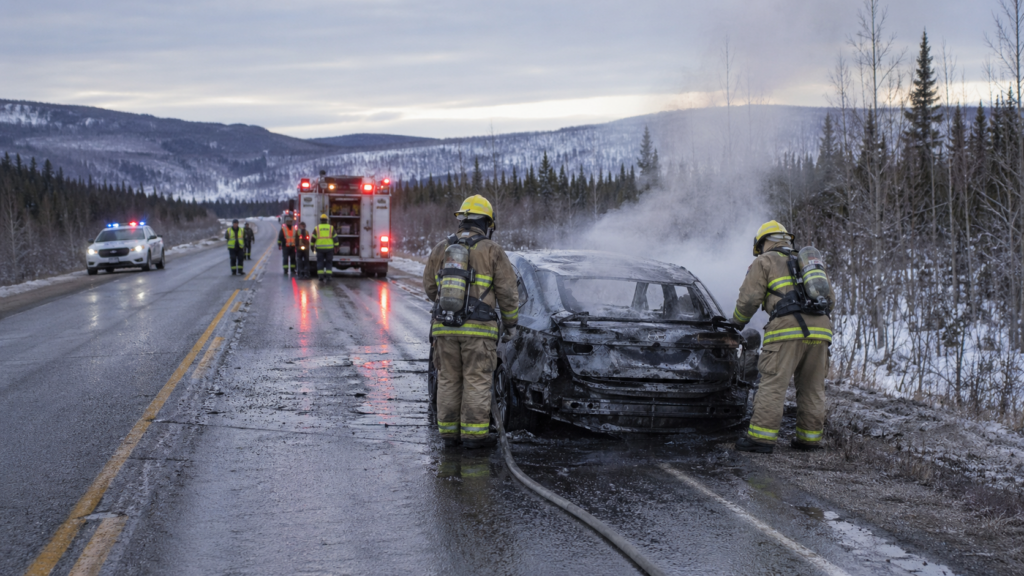
A recent electric vehicle fire on Highway 17 near Gurney, about 50 km west of Schreiber, Ontario, once again highlights the safety challenges created by modern electric vehicles. According to local media, the vehicle was a Tesla and was considered a complete loss despite firefighting efforts. Fortunately, no injuries were reported.
This type of incident is important not only because it happened on a highway, but because it shows a growing problem for emergency responders, towing companies, parking operators, charging stations, and fleet owners: when an EV catches fire, fast isolation is critical.
Why Electric Vehicle Fires Are Different
Electric vehicles use high-voltage lithium-ion battery packs. When a battery is damaged, defective, overheated, or involved in a collision, it may enter thermal runaway—a dangerous chain reaction where battery cells overheat and release heat, gas, smoke, and flames. NFPA explains that damaged or defective lithium-ion batteries can enter thermal runaway, creating special risks for responders.
Unlike a traditional fuel vehicle fire, an EV battery fire can be difficult to fully control. Firefighters must consider:
- High-voltage electrical hazards
- Toxic smoke and gases
- Possible reignition
- Long cooling and monitoring time
- Fire spread to nearby vehicles, buildings, or roadside vegetation
The U.S. Fire Administration also identifies electric shock, thermal runaway, battery ignition, reignition, and stranded energy as key risks in EV and lithium-ion battery incidents.
Why a Car Fire Blanket Is Necessary
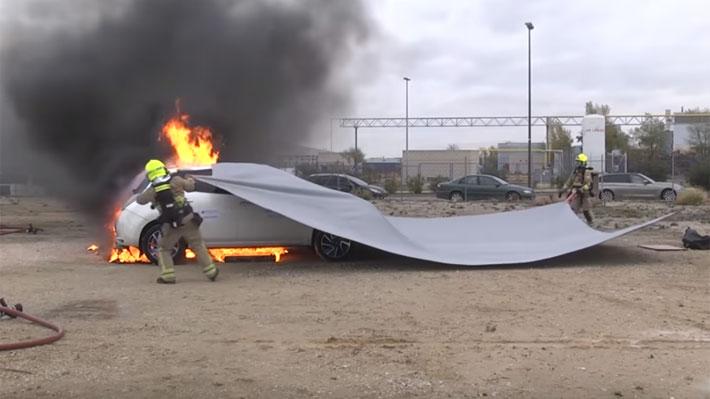
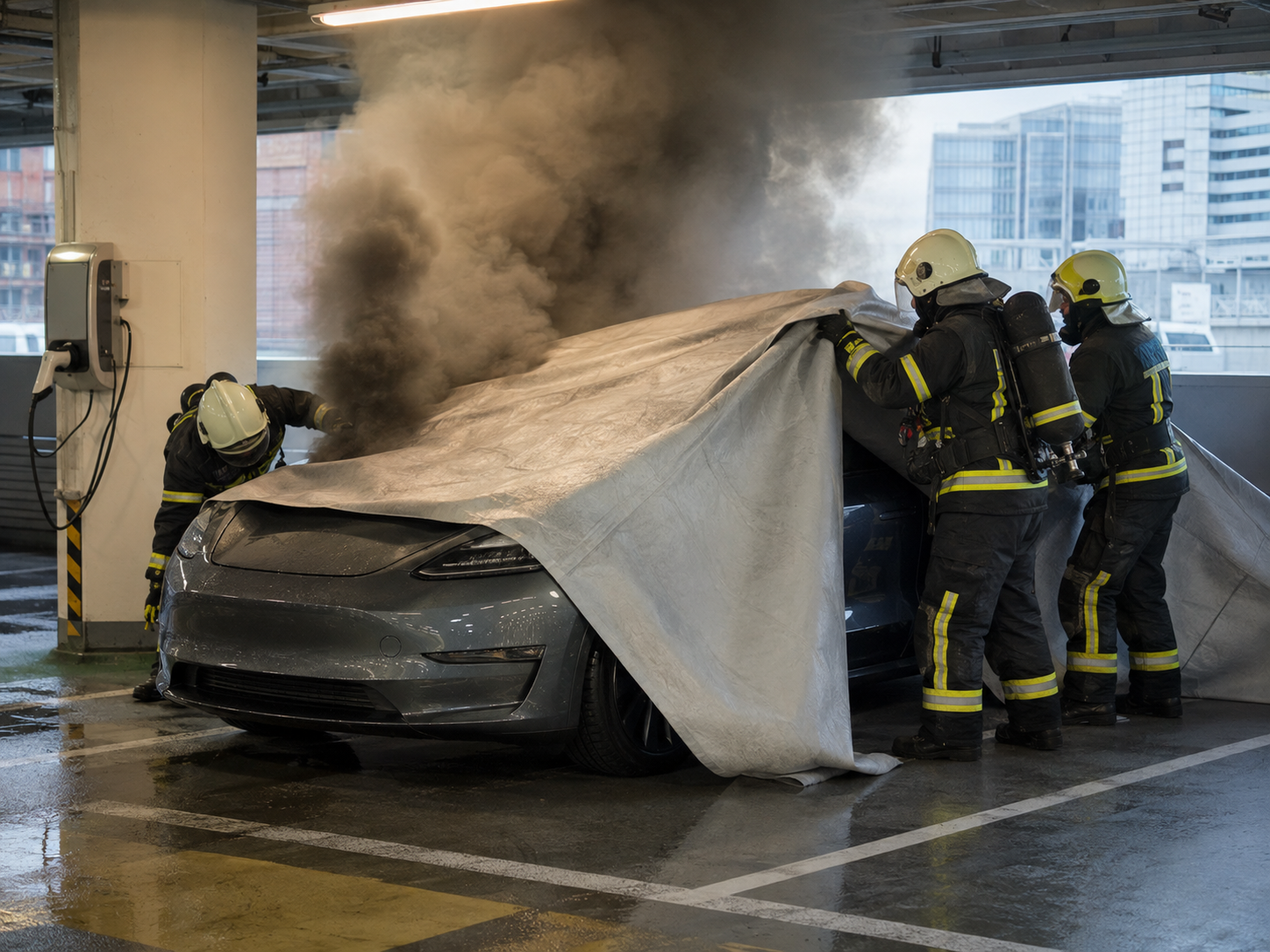
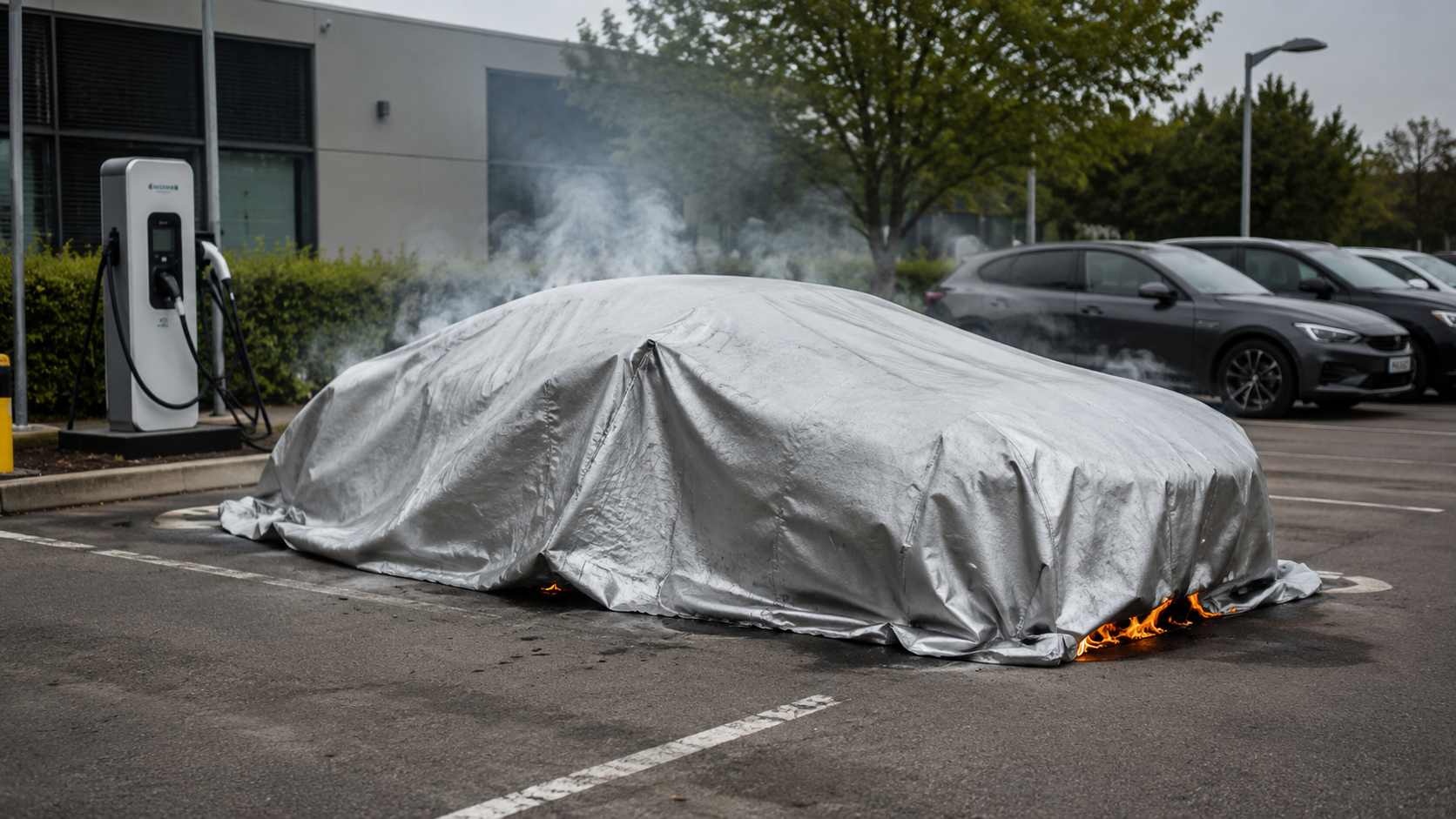
A car fire blanket, especially an EV fire blanket, is designed to quickly cover a burning vehicle and isolate the fire from the surrounding environment. It is not only a fire suppression tool; it is also a fire containment and risk-control tool.
For EV fires, the main goal is often not to “instantly extinguish” the battery pack. Instead, the goal is to:
Control flames. Reduce smoke. Limit heat spread. Protect people and property. Buy time for professional responders.
This is why EV fire blankets are increasingly used by fire departments, parking garages, workshops, charging stations, car dealers, ferry operators, and fleet depots.
1. Fast Fire Isolation on Roads and Highways
The Highway 17 case shows that EV fires can happen outside controlled environments. On a highway, responders may face limited water access, traffic risks, weather conditions, and distance from fire stations.
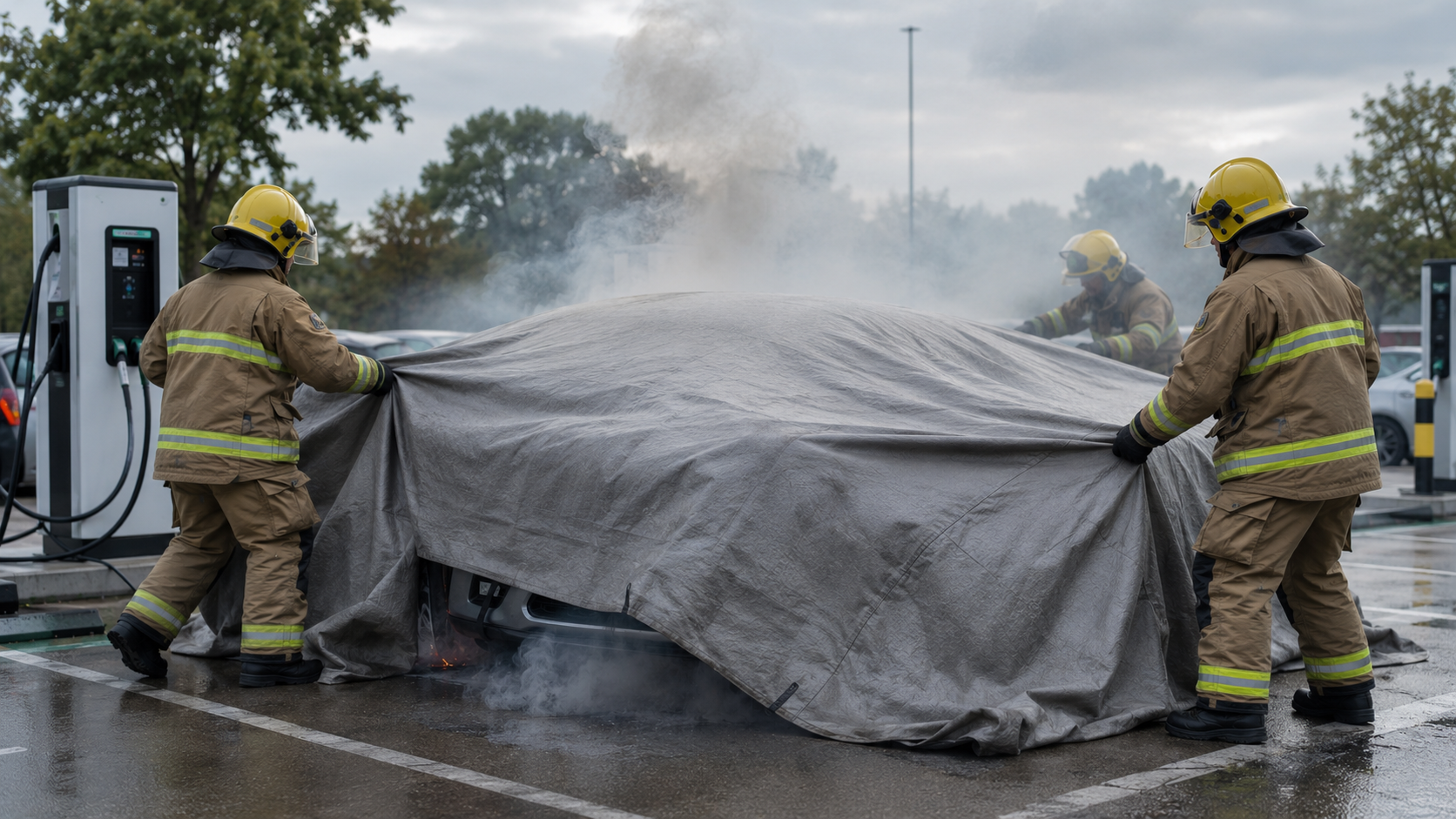
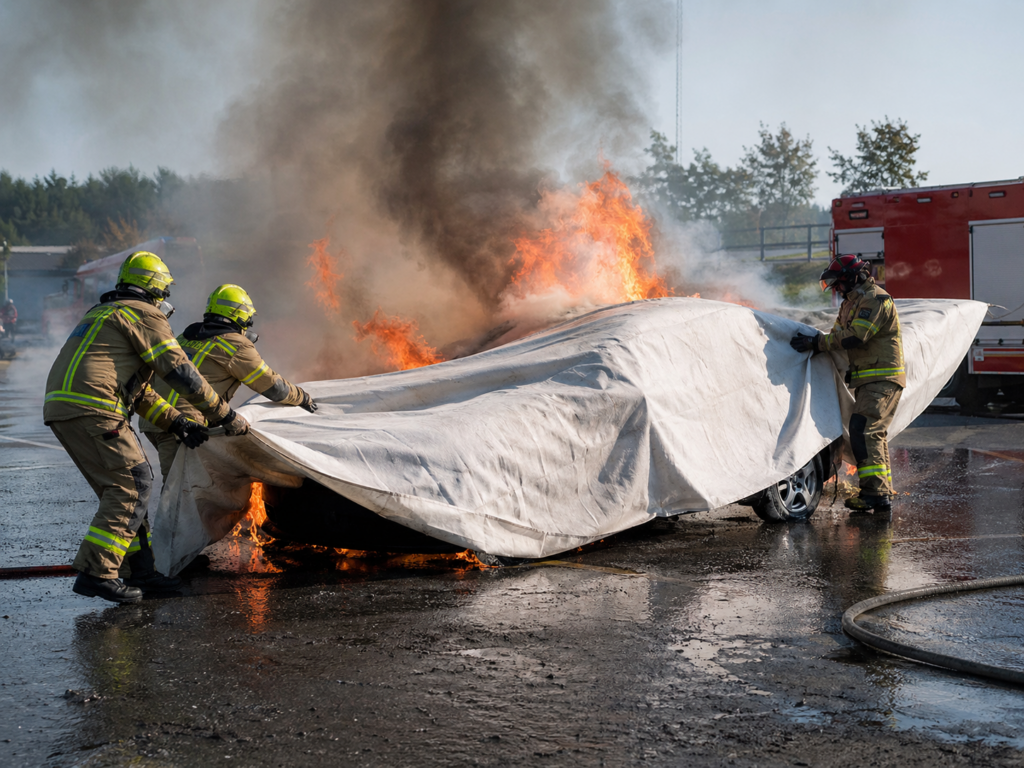
An EV fire blanket can help emergency teams quickly isolate the burning vehicle, reduce flame exposure, and create a safer working zone around the car. For roadside rescue and towing operations, this can be especially valuable.
2. Reducing Fire Spread to Nearby Vehicles and Property
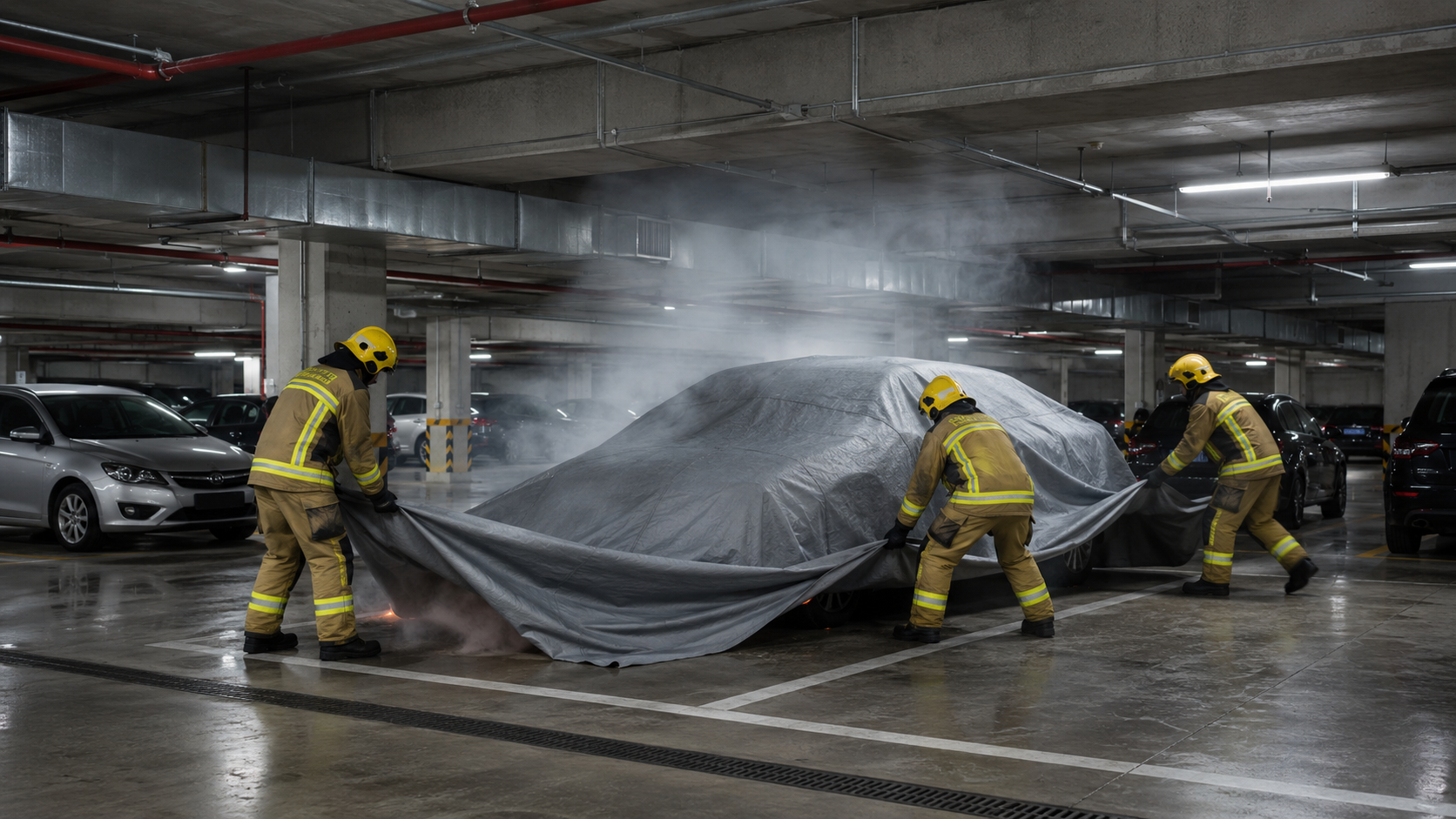
In parking lots, underground garages, repair shops, charging stations, and transport yards, one burning EV can threaten multiple nearby vehicles.
A properly deployed EV fire blanket helps contain flames and heat around the source vehicle. This reduces the chance of secondary fire spread, which is especially important in:
- Car dealerships
- EV charging stations
- Fleet parking areas
- Shopping mall garages
- Apartment underground parking
- Auto repair workshops
- Vehicle transport and storage yards
3. Controlling Smoke and Toxic Gas Exposure
EV and lithium-ion battery fires can release hazardous smoke and gases. Ontario’s firefighter guidance notes that thermal runaway creates fire gases that are highly toxic.
A fire blanket helps limit smoke movement by covering the vehicle and reducing oxygen supply. This can improve visibility, reduce smoke spread, and help protect nearby people before professional fire crews complete full control.
4. Supporting Firefighters, Not Replacing Them
A car fire blanket should not be seen as a replacement for firefighters. It is a first-response containment tool.
In many EV fire scenarios, the blanket can be used to stabilize the situation while emergency responders manage cooling, battery monitoring, water application, or safe vehicle removal. CTIF’s EV fire guidance emphasizes that electric vehicle incidents require practical operational methods and equipment to manage thermal runaway and electrical risks.
For commercial sites, this means a fire blanket can be part of a larger EV fire safety plan, including:
- Staff training
- Emergency response procedures
- Fire department coordination
- Clear access routes
- Charging area risk assessment
- Thermal camera monitoring when available
5. Essential for EV Charging Stations and Fleet Operators
As EV adoption grows, more vehicles are parked and charged in concentrated spaces. A single charging station may serve cars, vans, buses, forklifts, scooters, or delivery vehicles.
For B2B buyers, EV fire blankets are becoming necessary safety equipment for:
- Public charging stations
- Logistics fleets
- Car rental companies
- Auto dealerships
- EV repair centers
- Battery testing facilities
- Ports and ferry terminals
- Municipal and government fleets
When an EV fire occurs, every second matters. Having the right blanket stored nearby can help teams respond faster and reduce the potential damage.
What to Look for in a Professional EV Fire Blanket
For industrial and commercial use, buyers should choose a fire blanket designed for vehicle-size fire containment, not a small household fire blanket.
Important specifications include:
- Large enough to fully cover sedans, SUVs, and EVs
- High-temperature resistant fiberglass or silica-based fabric
- Reinforced edges and strong pulling handles
- Compact storage bag or cabinet for fast access
- Suitable for two-person deployment
- Designed for parking lots, garages, workshops, and roadside response
- Clear operation instructions and training support
Conclusion: EV Fire Blankets Are No Longer Optional Safety Equipment
The Highway 17 EV fire in Ontario is another reminder that electric vehicle fires can happen anywhere—on highways, in garages, at charging stations, or in fleet parking areas.
As electric vehicles become more common, businesses and public facilities need practical tools to manage the risks. A professional EV car fire blanket provides fast isolation, smoke reduction, heat containment, and valuable time for emergency response.
For fire departments, fleet operators, charging station owners, parking facilities, and vehicle service centers, an EV fire blanket is not just an accessory. It is becoming an essential part of modern vehicle fire safety.