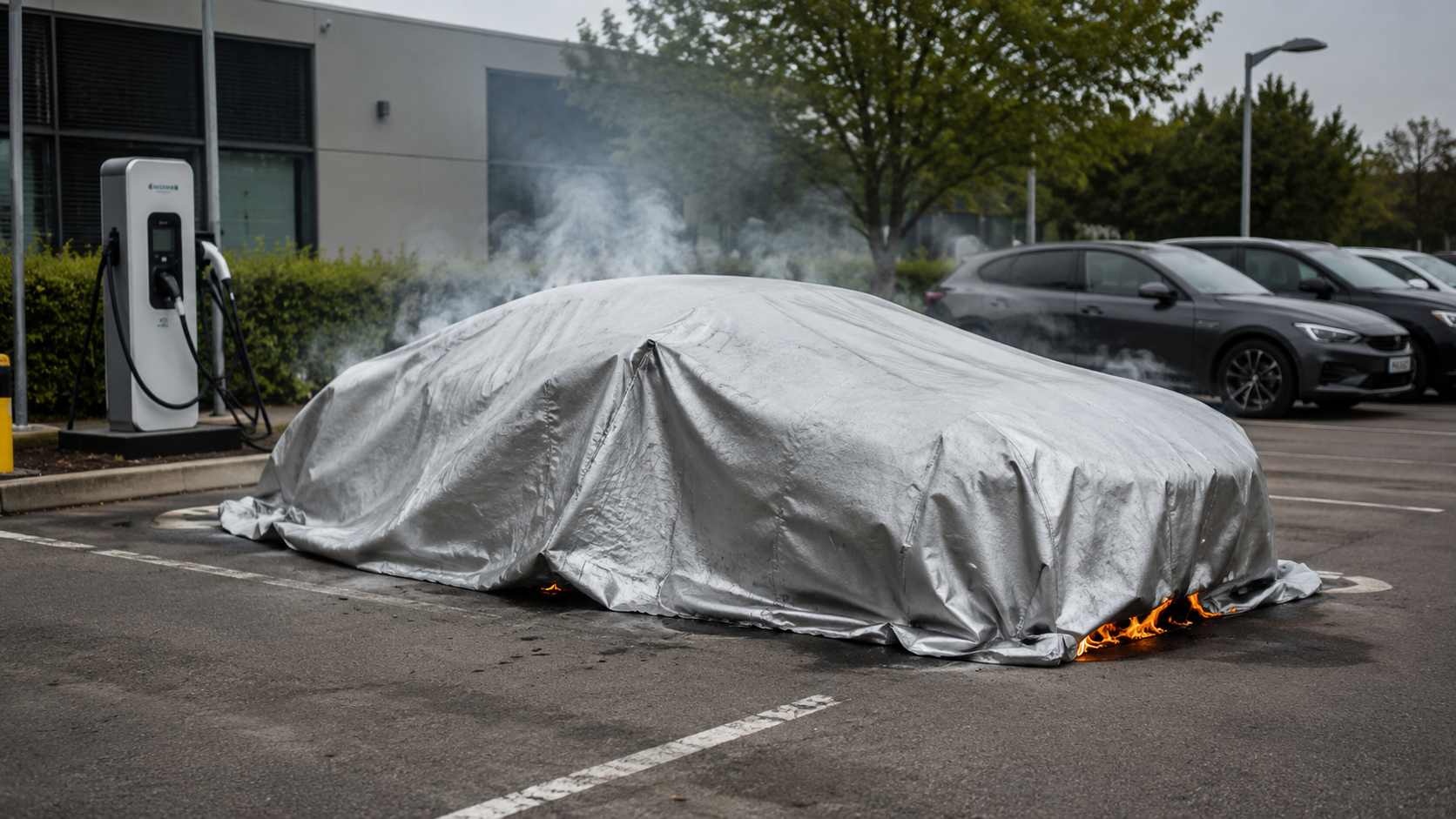

Electric vehicles (EVs) are becoming increasingly popular worldwide due to their efficiency and environmental benefits. However, as the number of EVs grows, vehicle fire safety has become an important topic for charging stations, parking facilities, automotive companies, and emergency response teams.
A recent Zeekr 7X electric vehicle fire incident near a charging area in China has once again highlighted the importance of effective EV fire containment solutions. While the exact cause of the incident remains under investigation, the event demonstrates why businesses and safety professionals are paying more attention to electric vehicle fire blankets and other vehicle fire protection equipment.
Recent EV Fire Incident Raises Safety Awareness
In August 2026, a Zeekr 7X electric SUV reportedly caught fire near a charging area in Ningbo, China. Emergency responders attended the scene and extinguished the fire. No injuries were reported, and the manufacturer later released information regarding the incident.
Although investigations into individual vehicle fires are necessary to determine the exact cause, EV incidents like this remind the industry that lithium-ion battery fires present unique challenges compared with traditional vehicle fires.
Unlike conventional engine fires, battery thermal runaway can generate:
- Extremely high temperatures
- Large amounts of smoke and toxic gases
- Risk of fire spreading to nearby vehicles
- Possibility of re-ignition after initial suppression
These characteristics make early containment and isolation especially important.
What Is an EV Fire Blanket?
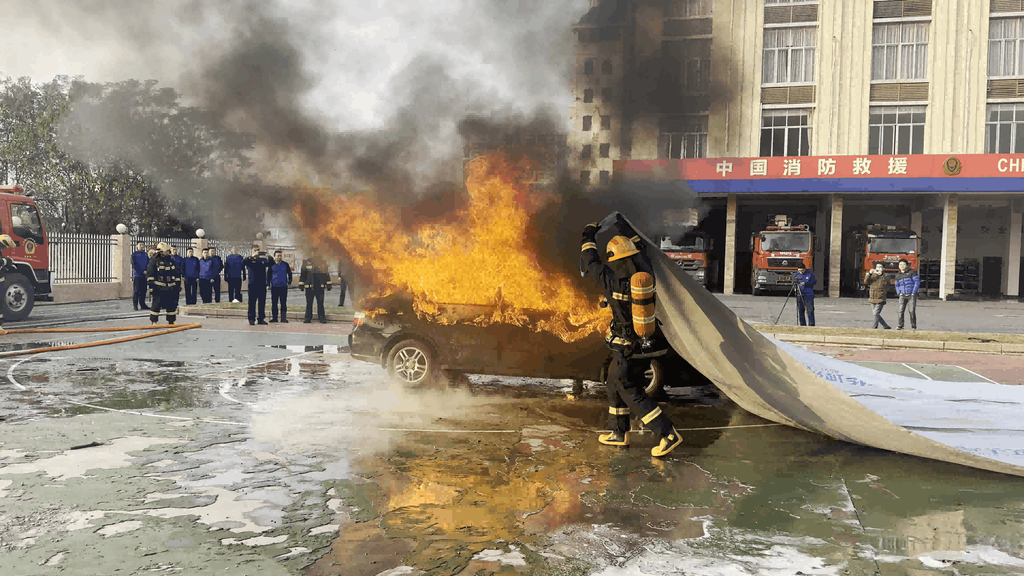
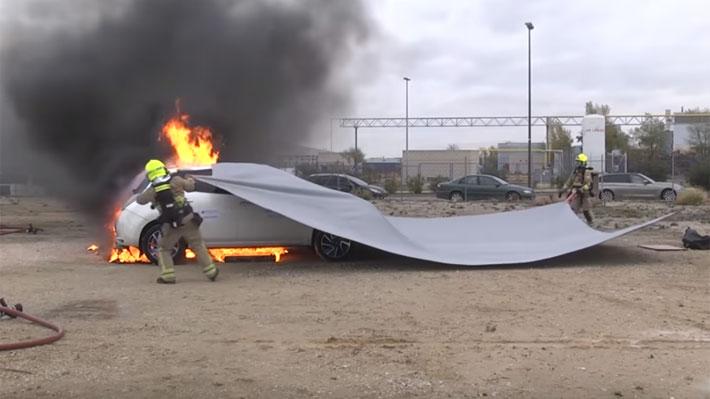
An EV fire blanket, also known as a vehicle fire containment blanket, is a large, heat-resistant protective cover designed to cover a burning vehicle.
Unlike a traditional fire extinguisher that focuses on putting out flames, an EV fire blanket is mainly designed to:
- Contain flames and reduce fire spread
- Limit smoke movement
- Protect nearby vehicles and structures
- Create a safer environment for emergency response operations
For electric vehicle fires, where battery reactions may continue for extended periods, containment can be a critical part of fire management.
Main Application Scenarios of Vehicle Fire Blankets
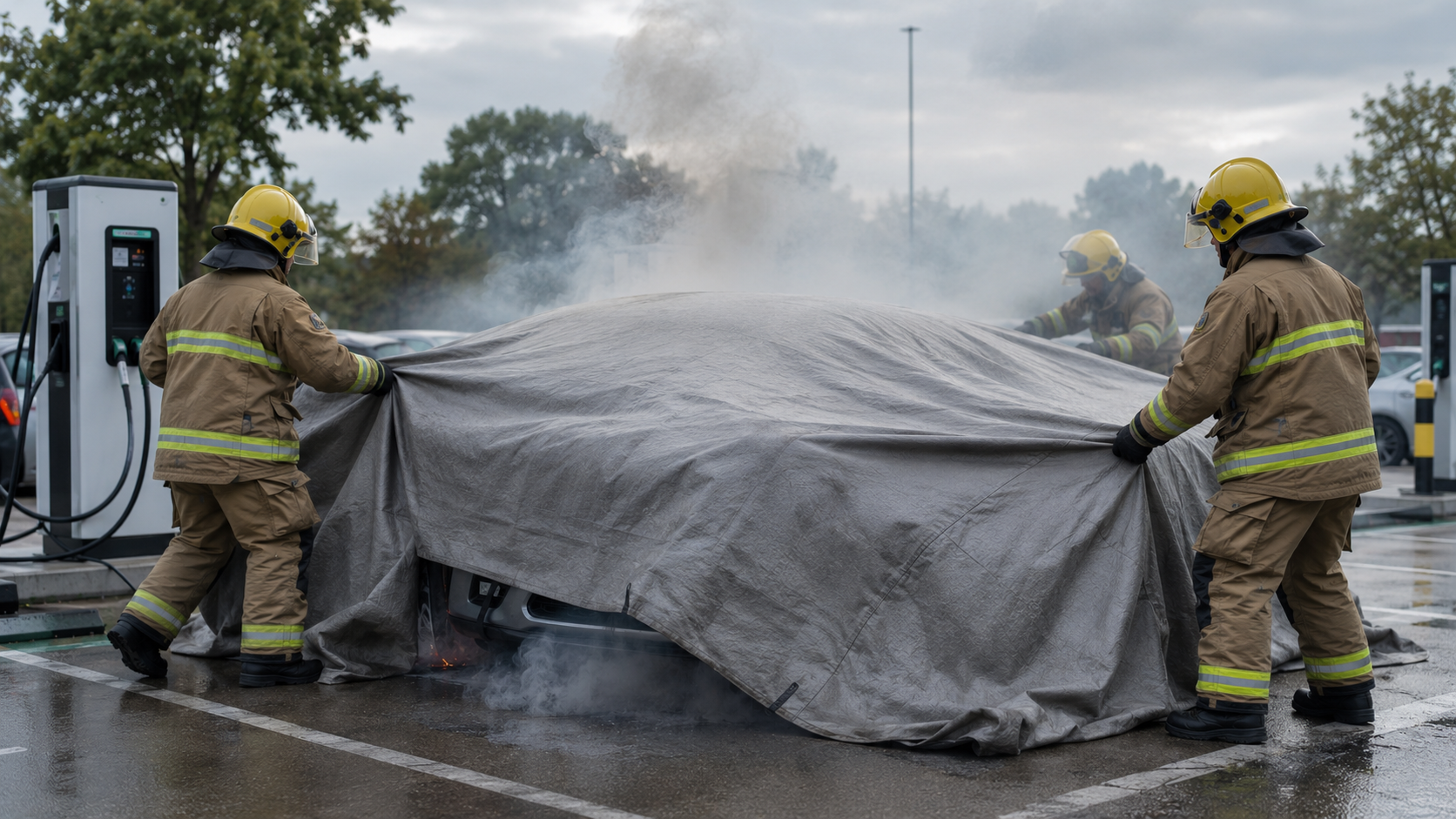
1. EV Charging Stations
One of the most important applications for vehicle fire blankets is at electric vehicle charging stations.
Charging areas usually contain multiple vehicles parked close together. If one EV experiences a battery fire, flames and heat may threaten surrounding vehicles.
Vehicle fire blankets can help:
- Isolate the burning vehicle
- Reduce exposure to nearby cars
- Minimize damage in crowded charging areas
- Improve emergency response efficiency
For charging station operators, EV fire blankets are becoming an important part of overall fire safety planning.
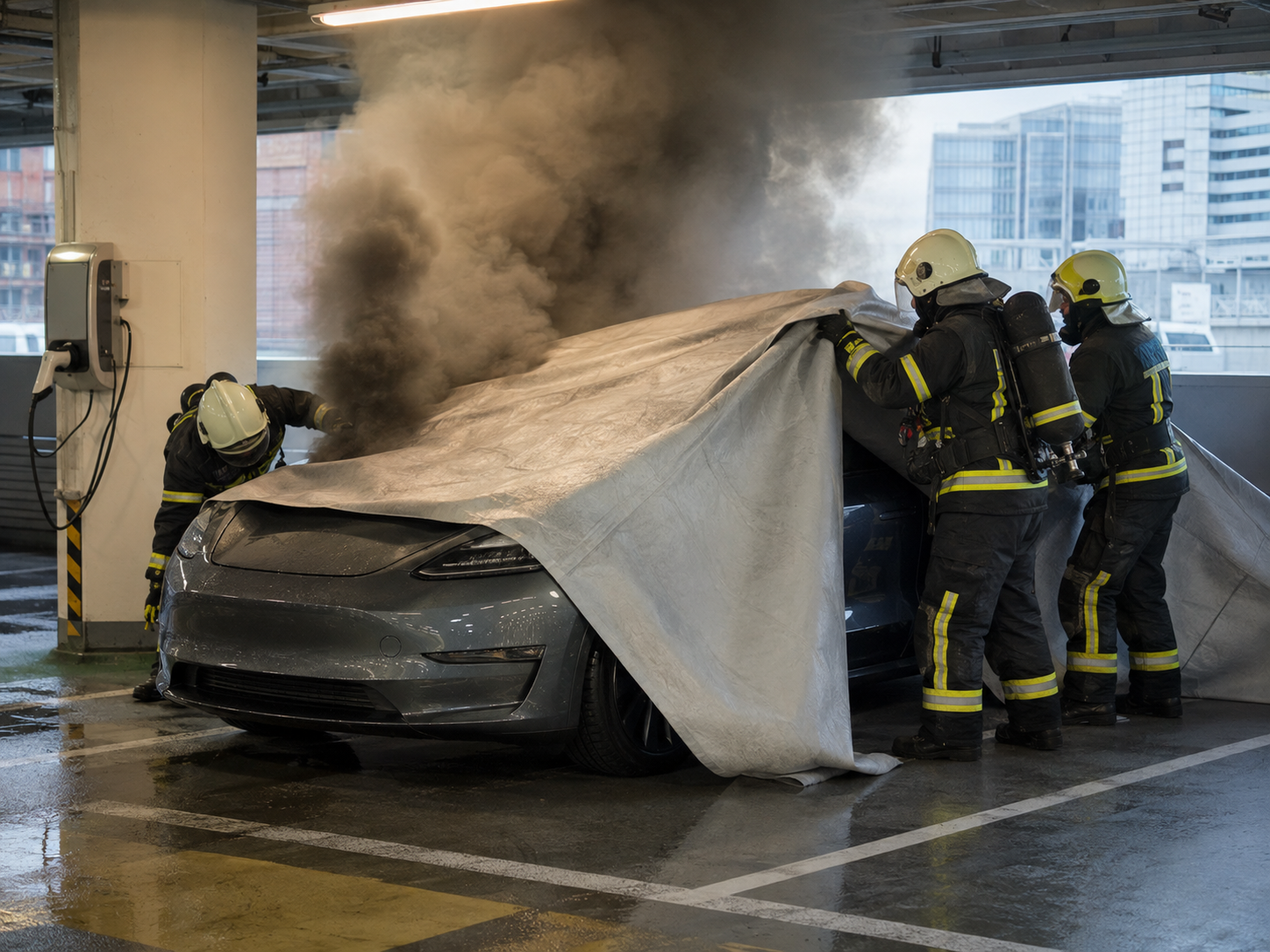
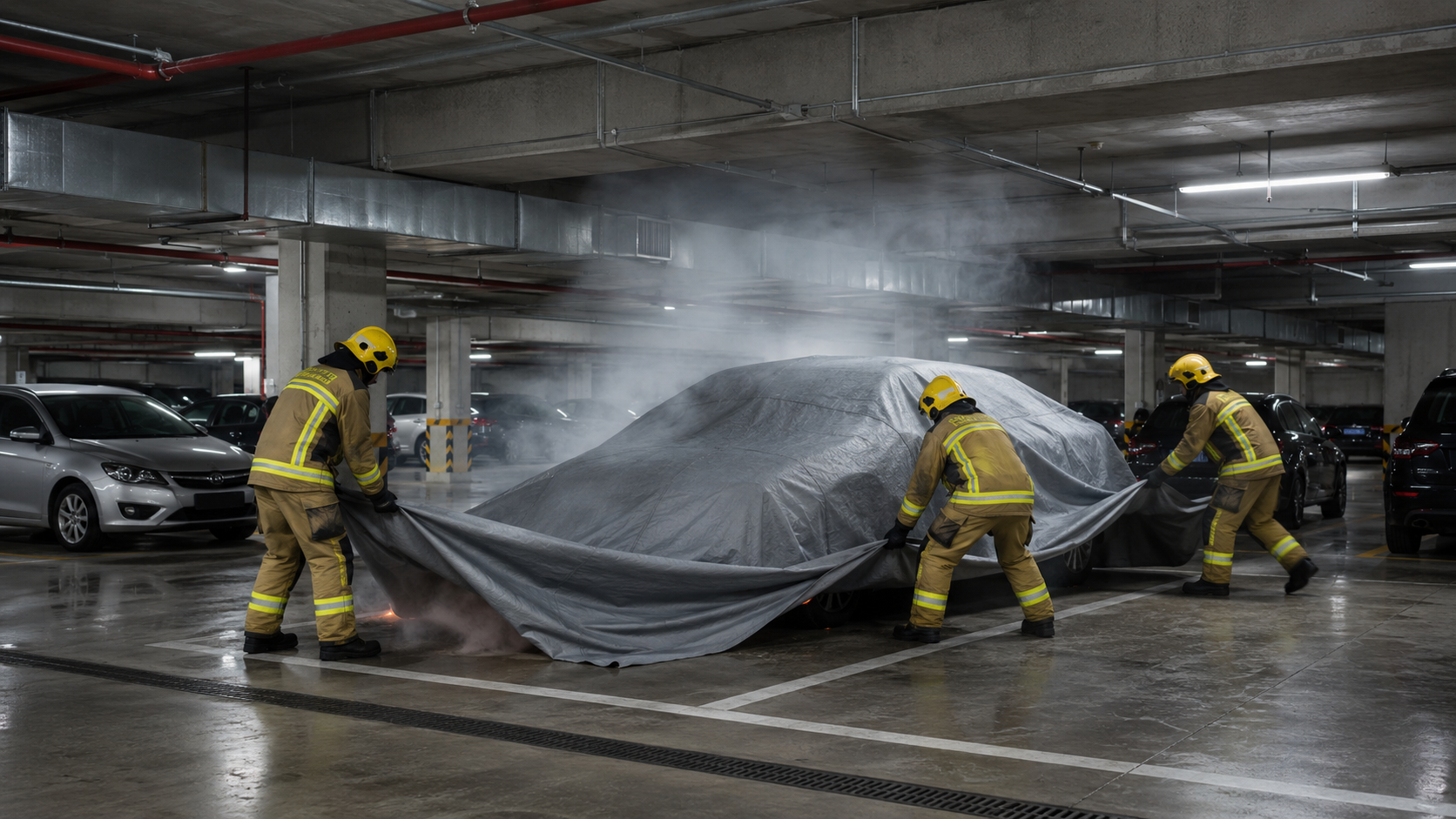
2. Underground Parking Garages
Underground parking facilities face additional challenges during vehicle fires:
- Limited ventilation
- Difficult access for firefighters
- High risk of smoke accumulation
- Closely parked vehicles
Installing vehicle fire blankets in underground garages can provide a rapid-response safety solution.
Typical locations include:
- Residential apartment parking areas
- Shopping mall parking garages
- Office building parking facilities
- Public parking structures
3. Automotive Dealerships and Service Centers
Modern automotive facilities often store and repair electric vehicles.
Potential fire risks may occur during:
- Battery inspection
- Vehicle maintenance
- Charging operations
- Accident repairs
Car dealerships and repair centers can use EV fire blankets as part of their emergency preparedness equipment.
4. Fleet Operations and Transportation Companies
Companies operating large vehicle fleets are also paying more attention to EV fire protection.
Common users include:
- Electric taxi fleets
- Delivery vehicle companies
- Bus operators
- Car rental companies
- Logistics companies
For fleet managers, vehicle fire blankets provide an additional safety measure when multiple vehicles are stored or charged in one location.
5. Emergency Response and Fire Departments
Fire departments and emergency teams increasingly encounter electric vehicle fires.
EV fire blankets can support emergency operations by helping responders:
- Control fire spread during rescue operations
- Protect surrounding areas
- Transport damaged vehicles more safely
- Reduce secondary fire risks
They are often used together with:
- Fire hoses
- Thermal imaging cameras
- Protective equipment
- Vehicle lifting and transport systems
Why Vehicle Fire Blankets Are Becoming More Important
The growth of electric vehicles has changed the way organizations approach vehicle fire safety.
Traditional fire protection methods remain important, but EV fires require additional strategies focused on:
- Fire containment
- Smoke control
- Area protection
- Emergency response coordination
A vehicle fire blanket does not replace professional firefighting equipment, but it provides an additional layer of protection when rapid containment is needed.
Choosing the Right EV Fire Blanket
When selecting a vehicle fire blanket, organizations should consider:
High Temperature Resistance
The material should withstand extreme heat conditions during vehicle fires.
Large Coverage Area
The blanket should be large enough to cover different vehicle sizes, including SUVs and electric vehicles.
Easy Deployment
Quick deployment is essential during emergency situations.
Durable Construction
Industrial-grade materials and reinforced edges improve reliability and service life.
Conclusion: Preparing for the Future of Vehicle Fire Safety
The Zeekr 7X EV fire incident near a charging area is another reminder that vehicle fire preparedness is becoming increasingly important as electric mobility expands.
For charging stations, parking operators, automotive companies, and emergency teams, EV fire blankets provide an effective vehicle fire containment solution that helps reduce risks and improve safety management.
As electric vehicles continue to grow globally, investing in professional fire protection equipment will become an essential part of modern transportation safety.