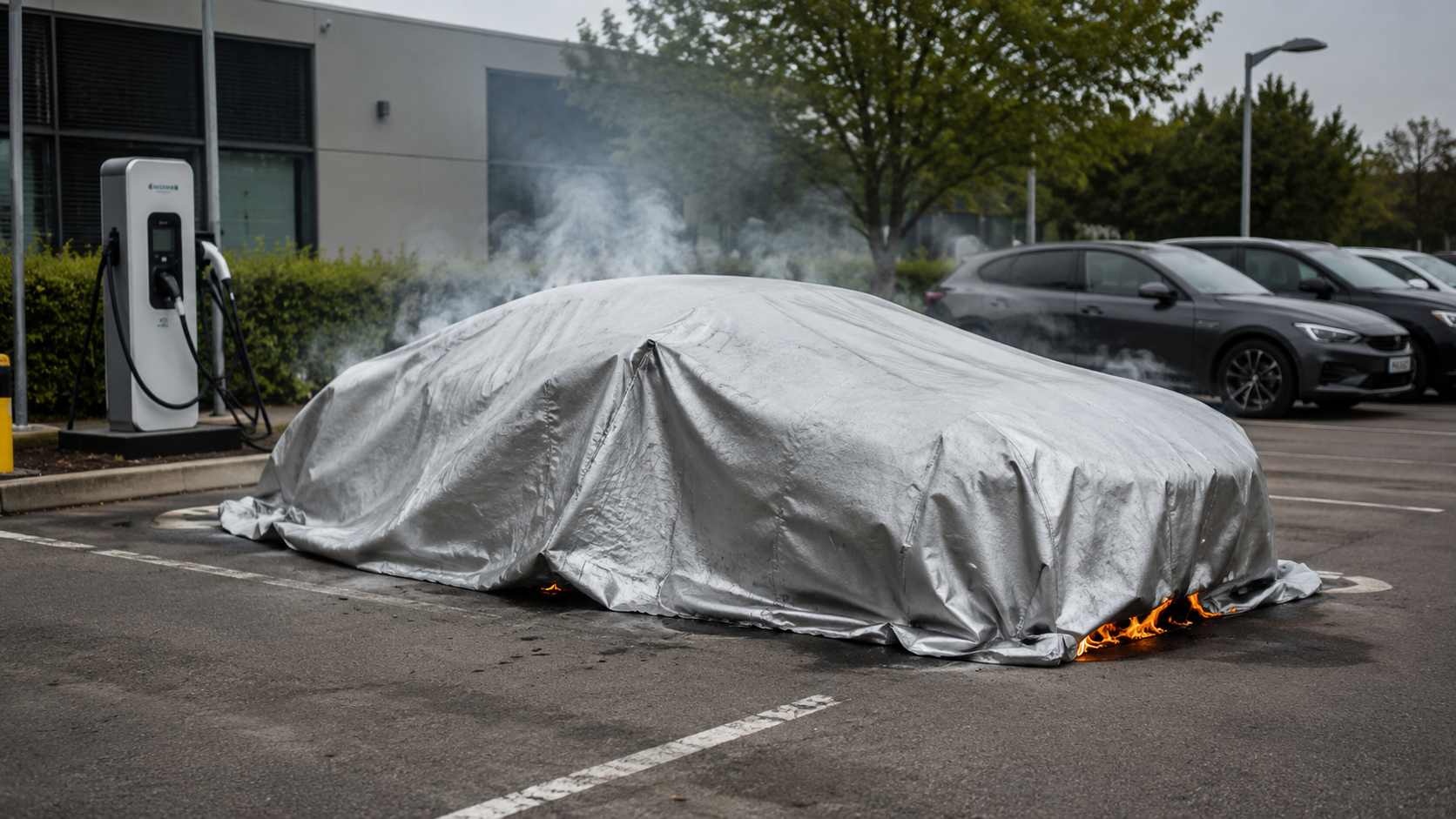

Electric vehicles are becoming increasingly common on roads, in car parks, charging stations, dealerships, logistics facilities, and residential buildings. As EV adoption grows, fire safety surrounding lithium-ion batteries is also receiving greater attention.
A recent electric vehicle fire in Singapore once again highlighted the challenges emergency responders and facility operators may face when a vehicle catches fire.
On July 21, 2026, a Mercedes-Benz EQA electric vehicle caught fire near a multi-storey car park in Woodlands, Singapore. According to local reports, the driver noticed a burning smell before the vehicle was seen engulfed in flames and producing thick black smoke. Emergency services responded to the incident, and no injuries were reported.
Importantly, the exact cause of the fire had not been publicly confirmed at the time of reporting. Therefore, it should not automatically be assumed that the high-voltage battery caused the incident. Nevertheless, the event provides a useful reminder that organizations accommodating electric vehicles need appropriate emergency response plans and suitable fire-control equipment.
One tool increasingly considered for vehicle fire containment is the EV fire blanket.
However, understanding what an EV fire blanket can — and cannot — do is essential for using it safely and effectively.
Why Electric Vehicle Fires Require Special Attention
Electric vehicles do not necessarily catch fire more frequently than conventional vehicles.
For example, Singapore’s Land Transport Authority and Civil Defence Force reported that in 2025 there were approximately 7 fires per 100,000 EVs, compared with about 22 fires per 100,000 internal-combustion-engine vehicles.
The difference is that an EV fire involving its lithium-ion traction battery can behave differently from a conventional vehicle fire.
The main concern is a process known as thermal runaway.
What Is Thermal Runaway?
Thermal runaway occurs when a lithium-ion battery cell experiences uncontrolled heat-generating reactions.
Possible triggers can include:
- Severe mechanical damage
- Internal electrical faults
- Short circuits
- Manufacturing defects
- Overheating
- Exposure to an external fire
- Certain charging-related failures
Once thermal runaway begins in one battery cell, heat can potentially spread to neighboring cells.
This process may generate significant heat as well as flammable and toxic gases. Research organizations such as RISE also note that thermal runaway can create both fire and explosion hazards.
As a result, an EV battery fire may require a different emergency response strategy from a conventional petrol or diesel vehicle fire.
Why EV Fires Can Be Difficult to Manage
When the high-voltage battery becomes involved in a fire, several factors can complicate emergency response.
1. The Battery Is Difficult to Reach
EV battery packs are generally installed underneath the vehicle.
Their protective casing is intentionally designed to withstand impacts, water, dirt, and other environmental hazards. While this construction improves normal vehicle safety, it can make direct access to burning battery cells difficult during a fire.
2. Thermal Runaway Can Continue Inside the Battery
Removing visible flames does not necessarily mean that reactions inside the battery have stopped.
A battery cell already experiencing thermal runaway can continue generating heat, while nearby cells may also become involved.
This is why cooling is an important part of professional firefighting strategies for EV battery incidents. RISE notes that water can be effective for cooling an accessible battery and helping prevent thermal runaway from spreading to additional cells.
3. Reignition Is Possible
Damaged lithium-ion batteries may retain significant stored energy.
Even after visible flames disappear, heat may remain inside the battery pack, creating a potential risk of renewed thermal activity or reignition.
For this reason, firefighters may continue monitoring an affected EV after the initial fire has been controlled.
4. Smoke and Gas Can Create Additional Hazards
Lithium-ion batteries experiencing thermal runaway can release flammable and toxic gases.
This is especially important in enclosed or semi-enclosed environments such as:
- Underground car parks
- Parking garages
- Vehicle workshops
- Ferries
- Warehouses
- Charging facilities
Limiting fire spread while maintaining a suitable professional emergency response strategy can therefore be critical.
What Is an EV Fire Blanket?
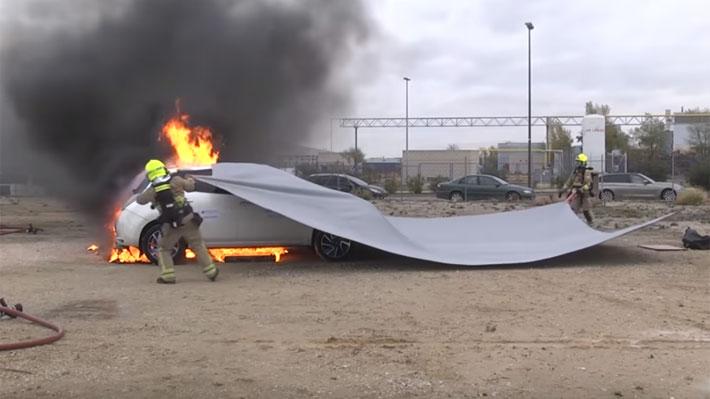
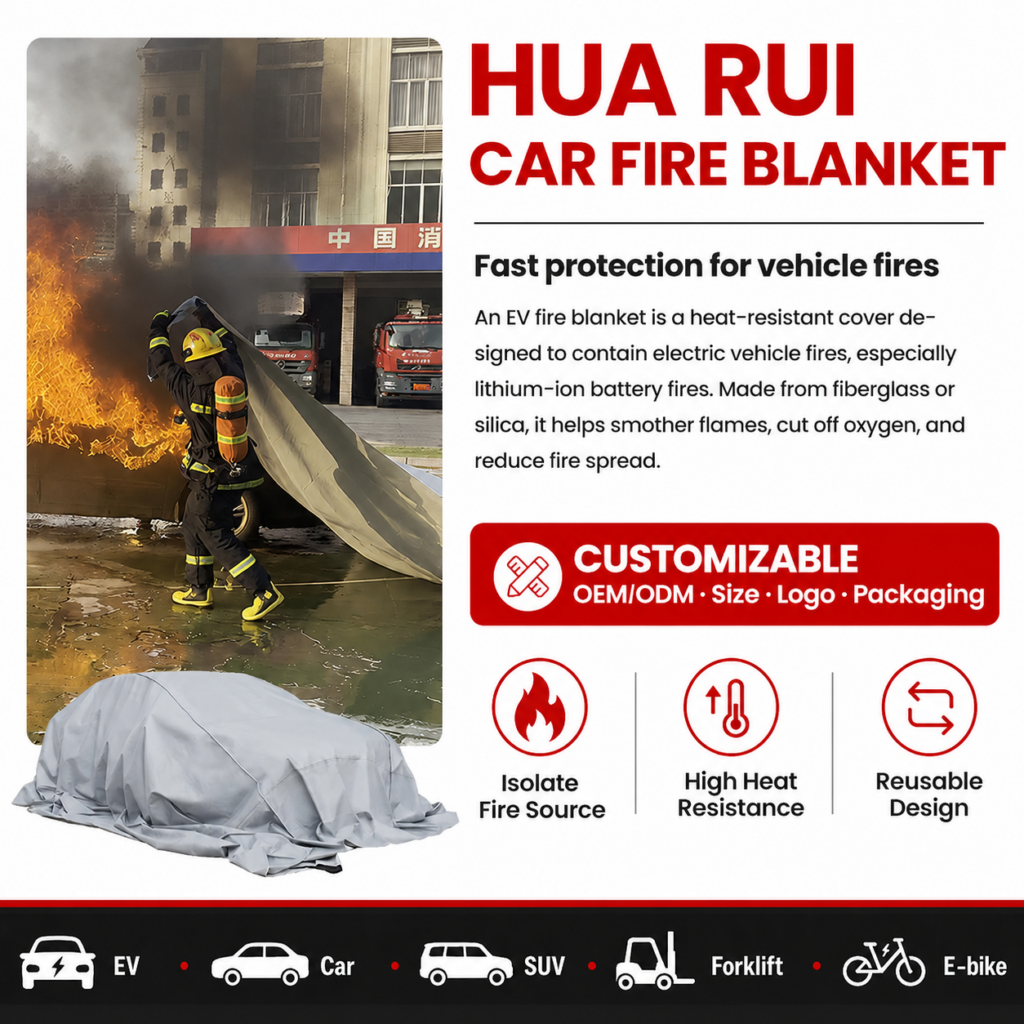
An EV fire blanket, sometimes called an electric car fire blanket or vehicle fire blanket, is a large, high-temperature-resistant blanket designed to cover an entire vehicle.
Unlike the small fire blankets commonly installed in residential kitchens, vehicle fire blankets are large enough to cover passenger cars, SUVs, and, depending on the model, larger commercial vehicles.
They are generally manufactured using high-temperature-resistant woven fabrics with specialized coatings designed to withstand severe fire exposure.
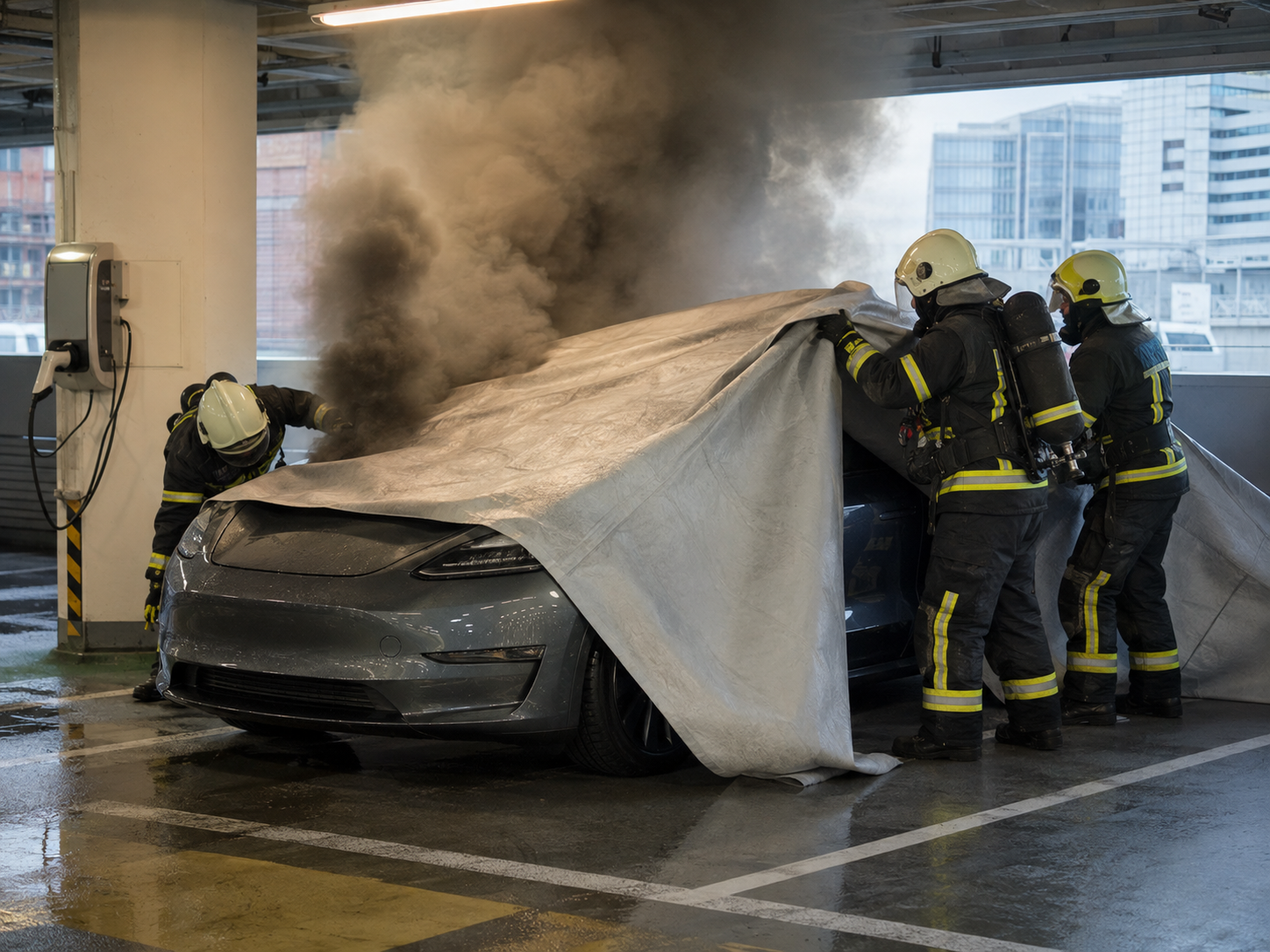
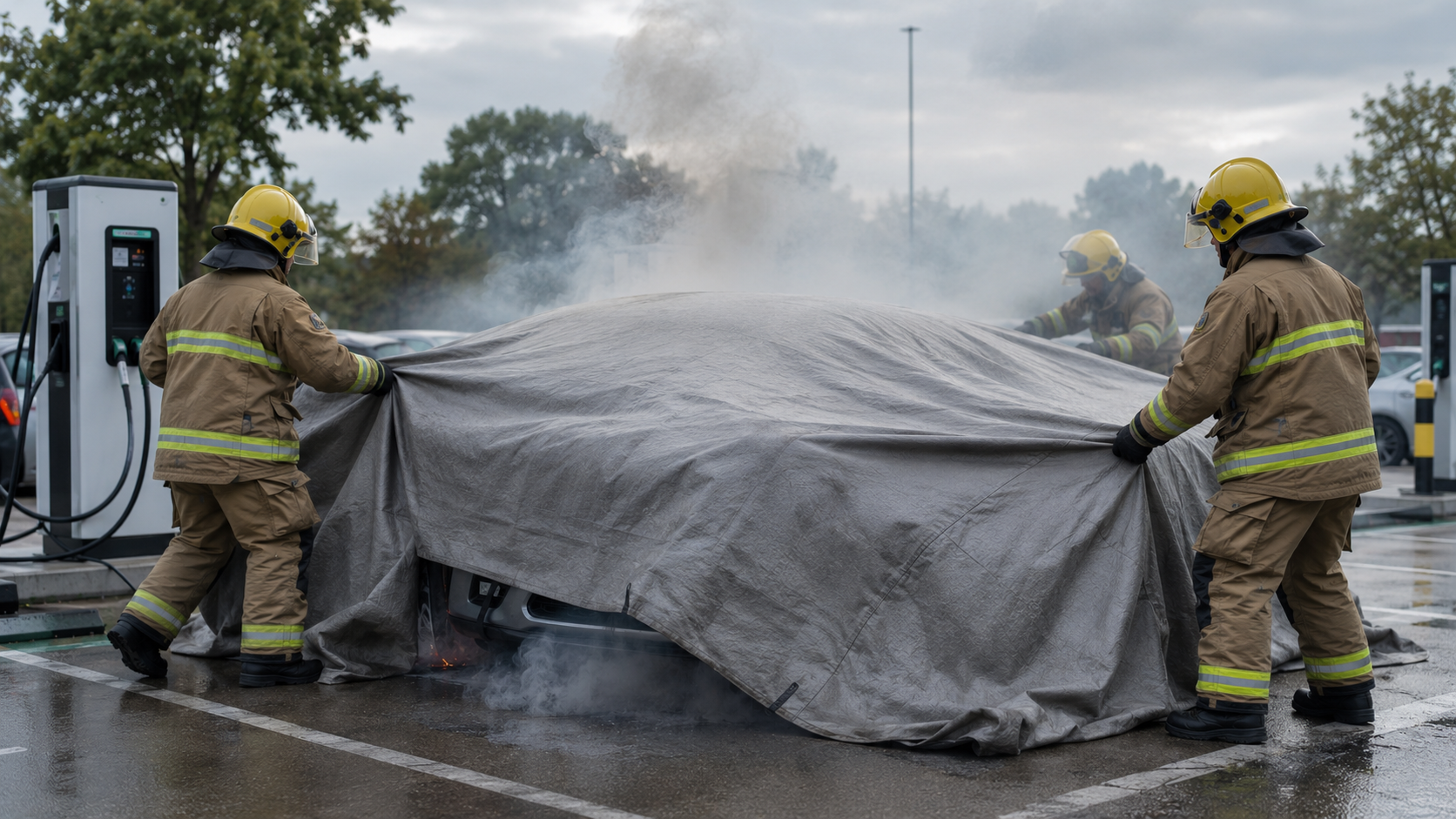
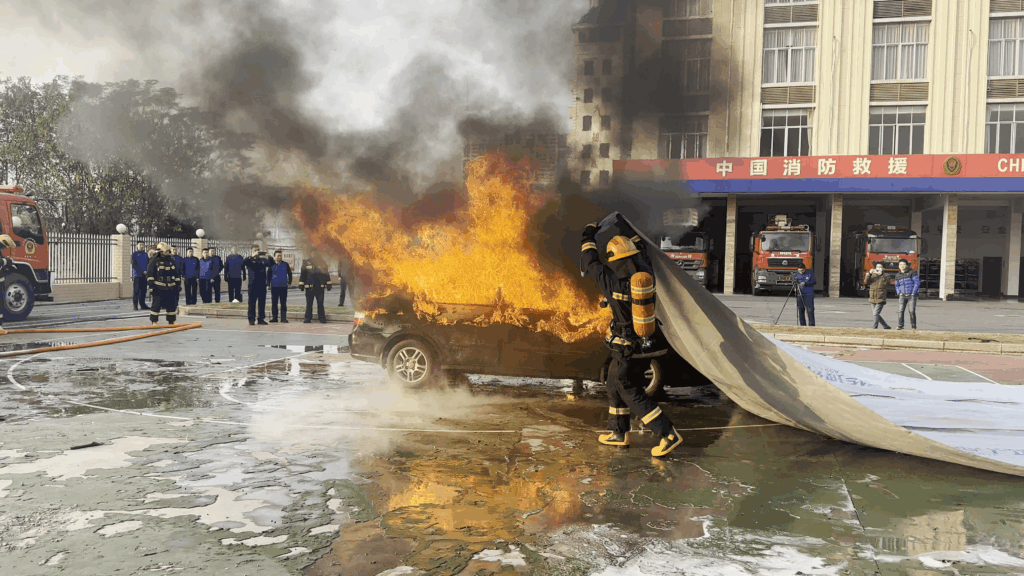
The blanket is deployed over the vehicle to create a physical barrier between the burning vehicle and the surrounding environment.
How Does an EV Fire Blanket Help During a Vehicle Fire?
An EV fire blanket is primarily a fire-containment tool, rather than a guaranteed method of extinguishing lithium-ion battery thermal runaway.
Its potential benefits include the following.
Containing Visible Flames
Covering the vehicle can restrict oxygen reaching conventional combustible materials within the car.
This can significantly reduce or suppress visible flames from materials such as:
- Seats
- Interior plastics
- Tires
- Exterior components
- Vehicle trim
Reducing flames can help decrease direct radiant heat exposure to nearby vehicles and structures.
Reducing Fire Spread
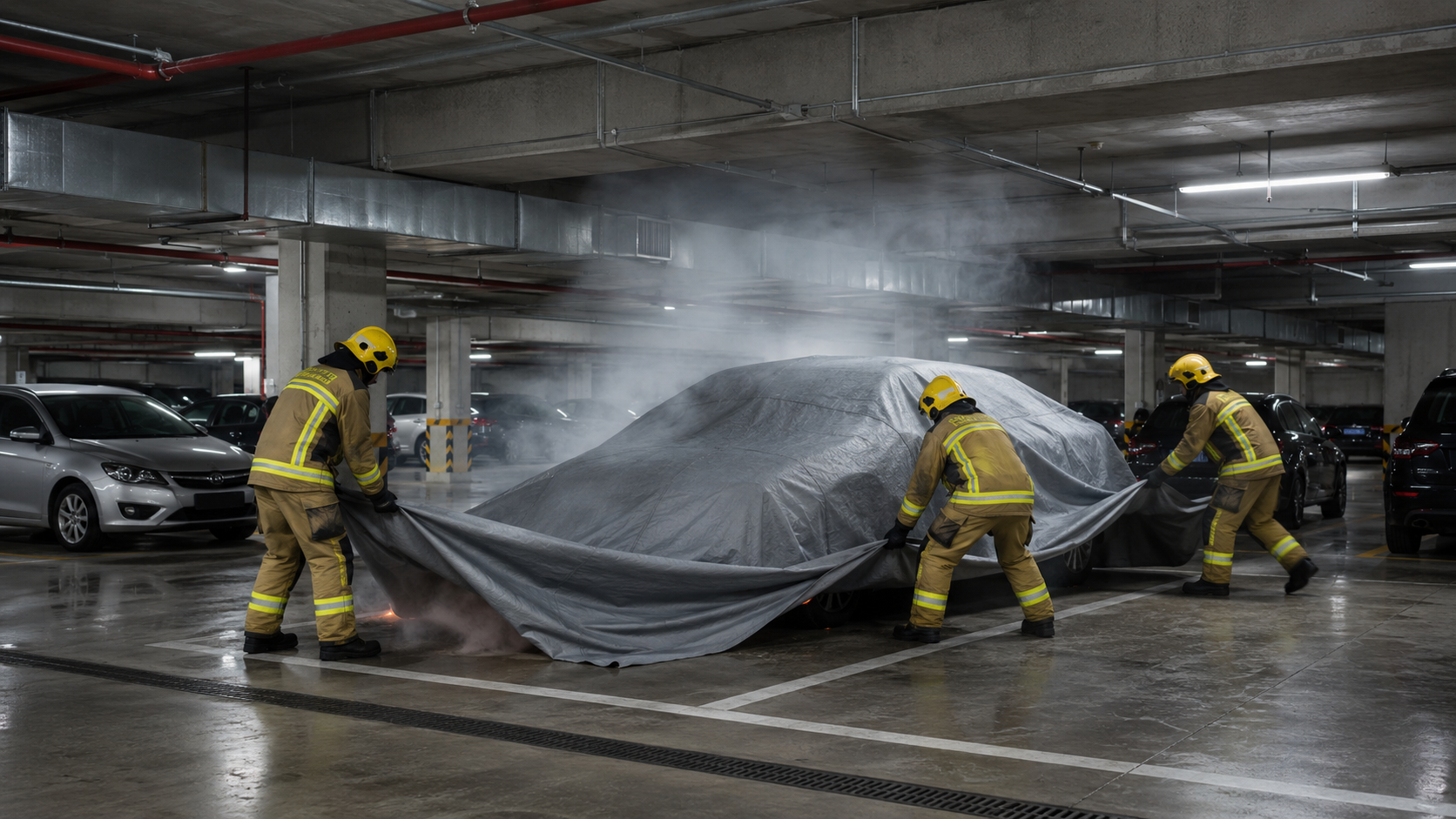
One of the most valuable applications of a car fire blanket is limiting the spread of fire to surrounding vehicles.
This is especially important in crowded environments where vehicles are parked close together.
Consider a fire occurring in:
- An underground parking garage
- A vehicle dealership
- A multi-storey car park
- A ferry vehicle deck
- A logistics terminal
Without containment, flames from one vehicle may expose adjacent vehicles or nearby combustible materials to intense heat.
A properly deployed vehicle fire blanket can provide an additional physical barrier that helps isolate the incident.
Helping Control Smoke Movement
Covering a burning vehicle may also reduce the uncontrolled spread of smoke from burning vehicle materials.
This can be particularly useful in parking garages and other confined locations where smoke can rapidly affect visibility and surrounding areas.
However, smoke and battery gases remain hazardous, and appropriate evacuation, ventilation, respiratory protection, and firefighting procedures must still be followed.
Supporting Emergency Response
Fire blankets may provide firefighters, parking operators, or trained emergency personnel with an additional containment option depending on the incident and local operating procedures.
Swedish emergency-response guidance, for example, identifies vehicle fire blankets as equipment that can potentially be used to protect the surrounding area or, following a risk assessment, assist with fire suppression.
Can an EV Fire Blanket Extinguish a Battery Fire?
This is where an important distinction must be made.
An EV fire blanket should not automatically be described as a device that completely extinguishes lithium-ion battery thermal runaway.
Research published by the Fire Protection Research Foundation and UL’s Fire Safety Research Institute has highlighted an important limitation.
During testing, vehicle fire blankets were able to eliminate visible flaming by restricting oxygen. However, when the EV battery was involved, thermal runaway could continue underneath the blanket.
As the battery continued releasing gases, flammable gases could accumulate beneath the blanket and potentially create an explosion hazard.
Reintroducing oxygen when removing a blanket may further increase this risk under certain conditions.
Therefore, EV fire blankets should be considered part of a broader professional fire-response strategy, not a replacement for trained firefighters, battery cooling, monitoring, evacuation, or site-specific emergency procedures.
Why Fire Containment Still Matters
The limitations of fire blankets do not mean that containment is unimportant.
In many vehicle fire situations, preventing fire from spreading beyond the original vehicle can significantly reduce secondary damage.
Imagine an EV fire occurring between two other cars in an underground parking garage.
The immediate safety objectives may include:
- Evacuating people from the hazardous area.
- Alerting emergency services.
- Preventing flames from spreading to neighboring vehicles.
- Protecting the surrounding structure.
- Managing smoke and hazardous gases.
- Cooling a battery involved in thermal runaway when appropriate.
- Monitoring the vehicle for renewed thermal activity.
An EV fire blanket may contribute particularly to the containment and exposure-protection portions of this response.
Recent EV Incidents Show Why Preparation Matters
The July 2026 Mercedes EQA fire was not the only recent development drawing attention to EV fire safety.
In February 2026, Volvo Cars announced a recall involving more than 40,000 EX30 electric SUVs because certain high-voltage battery modules could overheat and create a potential fire risk. Before repairs, affected owners were advised to limit charging to 70% and, in certain markets, park away from buildings.
Further reports in May 2026 described battery-related fires involving Volvo EX30 vehicles in Thailand, increasing scrutiny surrounding the issue. Volvo emphasized that actual fire incidents remained extremely rare among affected vehicles.
These cases should not be interpreted as evidence that EVs are inherently more likely to catch fire.
Instead, they demonstrate why battery safety, early detection, emergency planning and appropriate fire-control equipment become increasingly important as the global EV fleet grows.
Where Should EV Fire Blankets Be Considered?
Vehicle fire blankets may be particularly relevant wherever large numbers of electric vehicles are parked, charged, transported, serviced, or stored.
Parking Garages
Underground and multi-storey car parks present particular concerns because vehicles are parked close together and smoke can accumulate within an enclosed structure.
Fire containment equipment can therefore form part of a broader parking-garage fire safety strategy.
EV Charging Stations
Charging areas naturally have a high concentration of electric vehicles.
Operators should establish clear emergency procedures and ensure staff understand how to respond to smoke, unusual battery noises, excessive heat, or a vehicle fire.
Car Dealerships
EV dealerships may have dozens or even hundreds of vehicles parked relatively close together.
Containing a single vehicle fire can therefore help reduce the risk of substantial secondary property damage.
Automobile Workshops
Repair facilities can encounter vehicles with damaged battery systems following collisions or technical failures.
Any vehicle suspected of battery damage should be handled according to manufacturer and professional safety procedures.
Vehicle Warehouses and Logistics Centers
Large numbers of vehicles are frequently stored in logistics yards, ports, and distribution facilities.
Fire spread from one vehicle to others can create a major operational and financial loss.
Ferries and Vehicle Transport Ships
Vehicle decks contain cars in close proximity and present limited access compared with an open outdoor location.
Fire containment and early detection therefore play an important role in maritime vehicle safety strategies.
Tow Trucks and Vehicle Recovery Companies
Damaged EVs may present risks following serious collisions.
Recovery companies handling electric vehicles should establish dedicated procedures for identifying, transporting, storing, and monitoring potentially damaged battery vehicles.
What Should Buyers Look for in an EV Fire Blanket?
Not every vehicle fire blanket is designed for the same application.
Organizations purchasing an EV fire blanket should evaluate more than price alone.
Important considerations include:
High-Temperature Resistance
The blanket material must be designed for severe vehicle-fire environments.
Buyers should request clearly documented material specifications and test information from the manufacturer.
Suitable Vehicle Coverage
The blanket should be large enough to reach the ground around the vehicle.
Different sizes may be necessary for:
- Passenger cars
- SUVs
- Vans
- Commercial vehicles
Strong Construction
Large vehicle fire blankets may experience significant mechanical stress during deployment.
Material strength, seams, handles, and edge construction are therefore important.
Fast Deployment
A vehicle fire is a time-sensitive emergency.
The blanket should have a deployment system that trained personnel can understand and operate quickly.
Clear Instructions and Training
Purchasing equipment without establishing operating procedures provides limited protection.
Facilities should combine appropriate equipment with:
- Staff training
- Emergency drills
- Evacuation procedures
- Fire-department coordination
- Proper storage locations
- Regular equipment inspection
EV Fire Blankets Are One Part of a Complete Safety Strategy
There is no single tool that solves every electric vehicle fire scenario.
An effective EV fire safety strategy may involve a combination of:
- Early fire detection
- Smoke detection
- Appropriate ventilation
- Fire suppression systems
- Water supplies for professional firefighting
- Vehicle fire blankets
- Thermal imaging
- Safe separation distances
- Staff training
- Emergency evacuation plans
- Coordination with local firefighters
The exact approach should depend on the building, vehicle type, charging infrastructure, local regulations, and emergency-response capabilities.
Frequently Asked Questions About EV Fire Blankets
Do EVs Catch Fire More Often Than Petrol Cars?
Available data does not support the general claim that electric vehicles catch fire more frequently than internal combustion vehicles.
However, EV fires involving lithium-ion batteries can create different firefighting challenges, including thermal runaway, toxic and flammable gas generation, difficult battery access, and possible reignition.
Can a Fire Blanket Stop EV Thermal Runaway?
A fire blanket may suppress visible flames and help contain the fire, but it should not be assumed to stop thermal runaway occurring inside battery cells.
Battery cooling and professional emergency response may still be necessary.
Can an EV Fire Blanket Prevent Fire From Spreading to Other Cars?
Fire containment is one of the main potential benefits of a vehicle fire blanket.
By covering the burning vehicle and limiting flames and radiant exposure, the blanket may help reduce the risk of nearby vehicles becoming involved.
Are EV Fire Blankets Only for Electric Cars?
No.
Large vehicle fire blankets may also be used as containment tools for conventional petrol vehicles, diesel vehicles, hybrids, and other vehicles, depending on the blanket’s specifications and the emergency-response procedure.
Can Anyone Use an EV Fire Blanket?
Vehicle fires can involve extreme heat, toxic gases, explosions, high-voltage systems, and rapidly changing conditions.
Deployment should therefore follow the manufacturer’s instructions and local emergency procedures and should ideally be performed by properly trained personnel.
Members of the public should prioritize moving to a safe location and contacting emergency services rather than attempting to fight a serious EV fire themselves.
Conclusion
The recent Mercedes-Benz EQA fire in Singapore is another reminder that vehicle fire preparedness needs to evolve as electric mobility expands.
Although available evidence does not show that electric vehicles are more likely to catch fire than conventional cars, a lithium-ion battery involved in a fire can present unique challenges, including thermal runaway, difficult extinguishment, hazardous gases, and potential reignition.
An EV fire blanket can provide an important layer of fire containment by helping control visible flames and reducing exposure to nearby vehicles and property.
However, it is important to understand its limitations.
A fire blanket does not automatically stop thermal runaway inside an EV battery and should never be treated as a substitute for trained firefighters, cooling operations, monitoring, evacuation, or a comprehensive fire safety plan.
For car parks, charging stations, dealerships, workshops, logistics facilities, ferries, and other locations where electric vehicles are concentrated, the most effective approach is to combine appropriate fire-containment equipment, professional training, early detection, and well-planned emergency procedures.
As EV adoption continues to increase, preparing for low-frequency but potentially complex vehicle fire incidents will become an increasingly important part of modern fire safety management.